
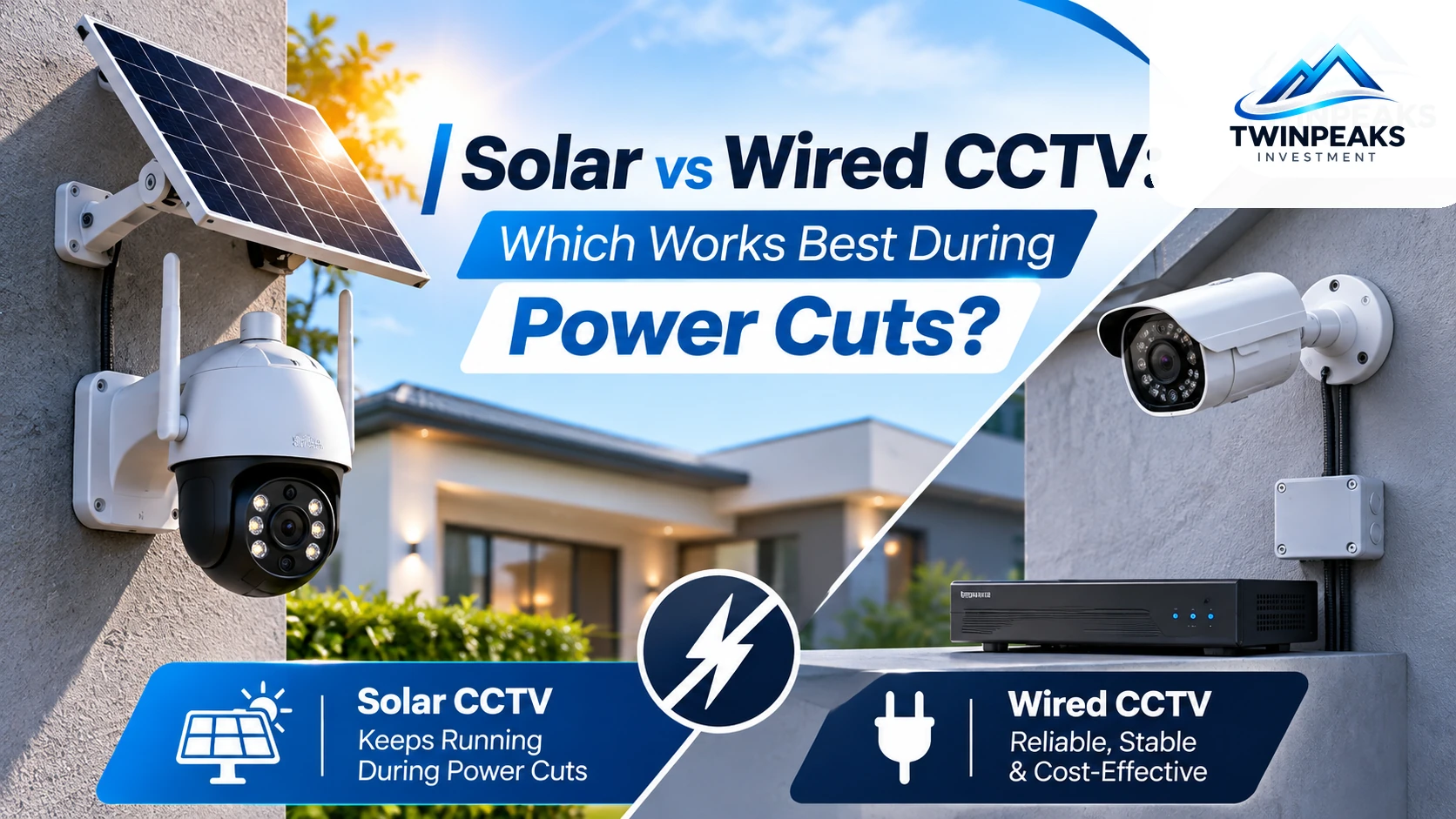
A security camera is only useful when it is powered and able to record. That is why many property owners in Eswatini ask whether solar CCTV is better than a traditional wired system when electricity is interrupted.
There is no single answer. Solar cameras and wired CCTV solve different problems. Choosing between them comes down to where the camera will be installed, how it will connect, how continuously it must record and how much backup time you require.
How solar security cameras work
A typical solar camera uses a panel to recharge an internal or connected battery. Many models communicate over Wi-Fi or a 4G SIM connection and store footage on a memory card, in the cloud or both, depending on the model.
Solar cameras are particularly useful at remote gates, farms, detached buildings and locations where running electricity and data cables would be difficult. A solar-and-4G setup can be attractive where there is no fixed internet connection.
However, solar does not mean unlimited power. Battery capacity, shade, weather, camera activity and charging conditions all affect runtime. Some battery-powered cameras mainly record when motion is detected rather than providing continuous recording. Mobile data charges and cloud subscriptions may also apply.
How wired CCTV can stay on during an outage
A conventional system connects cameras to a recorder or network. Wired PoE cameras can receive power and data over one Ethernet cable from suitable network equipment, while other wired camera types use separate power arrangements.
Without backup power, the cameras, recorder and network equipment may all stop when grid electricity is unavailable. A properly designed UPS or battery system can keep the required components running for a specified period.
For example, powering cameras alone is not enough if the recorder is off and the system depends on it to save footage. Likewise, remote phone viewing may stop if the internet router is not backed up, even when local recording continues.
Which setup is better for your property?
Choose solar CCTV when the location is isolated, cable installation is impractical, and the camera's recording mode and battery limitations meet your needs.
Choose wired CCTV with backup power when you need a multi-camera installation, centralised recording, dependable network connectivity and a system designed around the required uptime.
A hybrid design may be the best option: wired cameras around the main house and a solar 4G camera at a distant gate or outbuilding.
Questions to ask before buying
Ask whether the camera records continuously or only on motion, how footage is stored, what happens when the battery is low, how many hours of autonomy are expected, and what ongoing data or subscription costs apply.
Eswatini Electricity Company provides information about planned and unplanned interruptions. Whatever the local cause of an outage, the security-system design should make clear what will keep working and for how long.
Plan for reliability, not just a solar label
TwinPeaks Investment can help compare solar, wired and hybrid CCTV options for your home or business, including storage, installation and backup-power considerations.
Ready to take the next step?
Not sure whether solar CCTV or wired cameras with backup power suit your property? TwinPeaks Investment can help evaluate the site and recommend a system.
Explore our solutions: Surveillance & Alarm Systems.
Request a tailored quotation or contact TwinPeaks Investment to discuss your requirements.