
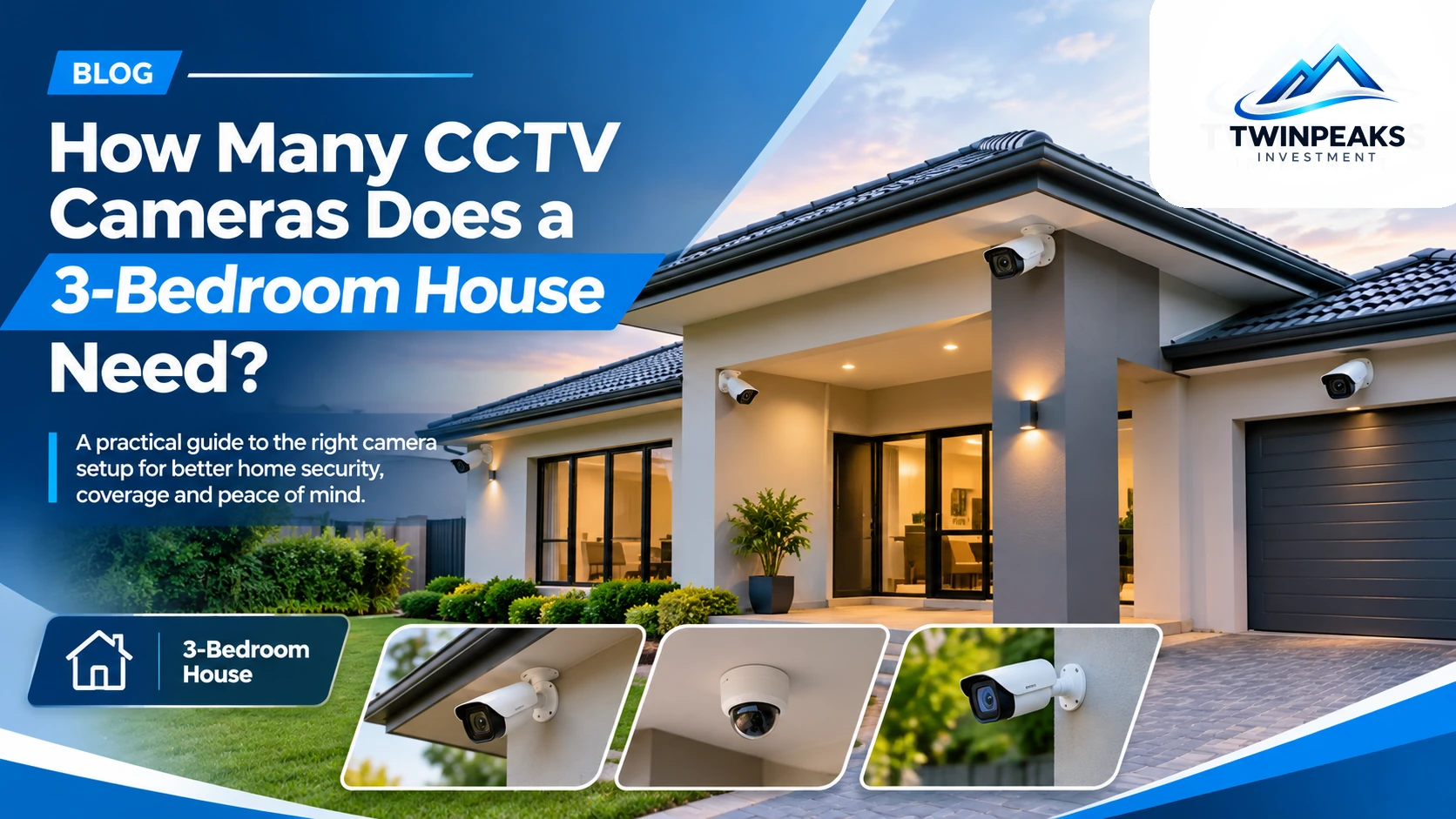
One of the most common questions homeowners ask before buying a security system is: how many CCTV cameras do I need? For a typical three-bedroom house, four cameras may be a sensible starting point. However, the correct number depends on the property layout, not the bedroom count.
A house with one entrance and a compact yard has different requirements from a fenced property with a garage, multiple gates and a long driveway. The goal is to cover important activity areas with clear images while avoiding unnecessary cameras.
Start with the highest-priority locations
For many homes, the first areas to assess are:
- Main gate or entrance: See who approaches and when vehicles enter or leave.
- Front door and approach: Capture visitors moving towards the house.
- Driveway or garage: Observe vehicle parking and activity around the garage.
- Rear or side access: Cover a less-visible route that may otherwise be a blind spot.
This is a planning example, not a universal four-camera formula. A camera placed on the wrong corner may miss the very area it was meant to protect.
Why positioning matters more than camera quantity
Camera height, lens selection and lighting can make or break an installation. A unit mounted too high may provide an excellent general view while showing too little facial detail. A camera looking directly towards strong headlights may struggle to identify a vehicle clearly.
At night, check whether the camera has suitable infrared or colour low-light capability for the scene. Outdoor lighting can help, but it should be positioned to avoid glare.
Consider the property beyond the main house
Does the home have a detached garage, outside room, staff accommodation or a second gate? These features can create separate security zones. You may also need to decide whether to cover the outside perimeter, the building entrances or both.
CCTV provides visibility and evidence; it does not physically stop an intrusion. Where early warning is important, outdoor beams and an alarm system can complement the cameras.
Avoid overlooking privacy and recording
Point cameras towards areas you legitimately need to secure, and avoid unnecessary views into neighbouring homes or private spaces. Make sure the recorder is in a secure location and that only authorised people have access to footage.
Ask about the recording retention period, backup power and remote access as part of the design. A camera that works only when the recorder has electricity may not meet your expectations during an outage.
Frequently asked question: Should cameras be installed inside bedrooms?
Bedrooms and bathrooms are highly private spaces. Residential camera plans should generally prioritise entrances, common access routes and exterior security rather than intrusive indoor recording.
Design for the home you actually have
Before ordering a kit, sketch your property and mark the gates, doors, garage and blind spots. TwinPeaks Investment can help turn those priorities into a practical camera layout and installation quotation.
Ready to take the next step?
Want a camera layout that fits your home rather than a generic kit? Ask TwinPeaks Investment for a home-security assessment and CCTV quotation.
Explore our solutions: Surveillance & Alarm Systems · Smart Security Solutions.
Request a tailored quotation or contact TwinPeaks Investment to discuss your requirements.